

Stress, Tension, Trauma,
& Your Nervous System.
Your nervous system is amazing.
It controls and coordinates everything in your body — how you move, think, feel, heal and cope, and it comes built with intelligent, automatic responses to keep you safe under stress.
But in modern life, the stressors can feel never-ending. And for you — and for your nervous system — this relentless pressure, or Chronic Stress, settles in as lasting tension: in our muscles, in our minds, and in our automatic responses.
The Master Controller:
Your Nervous System
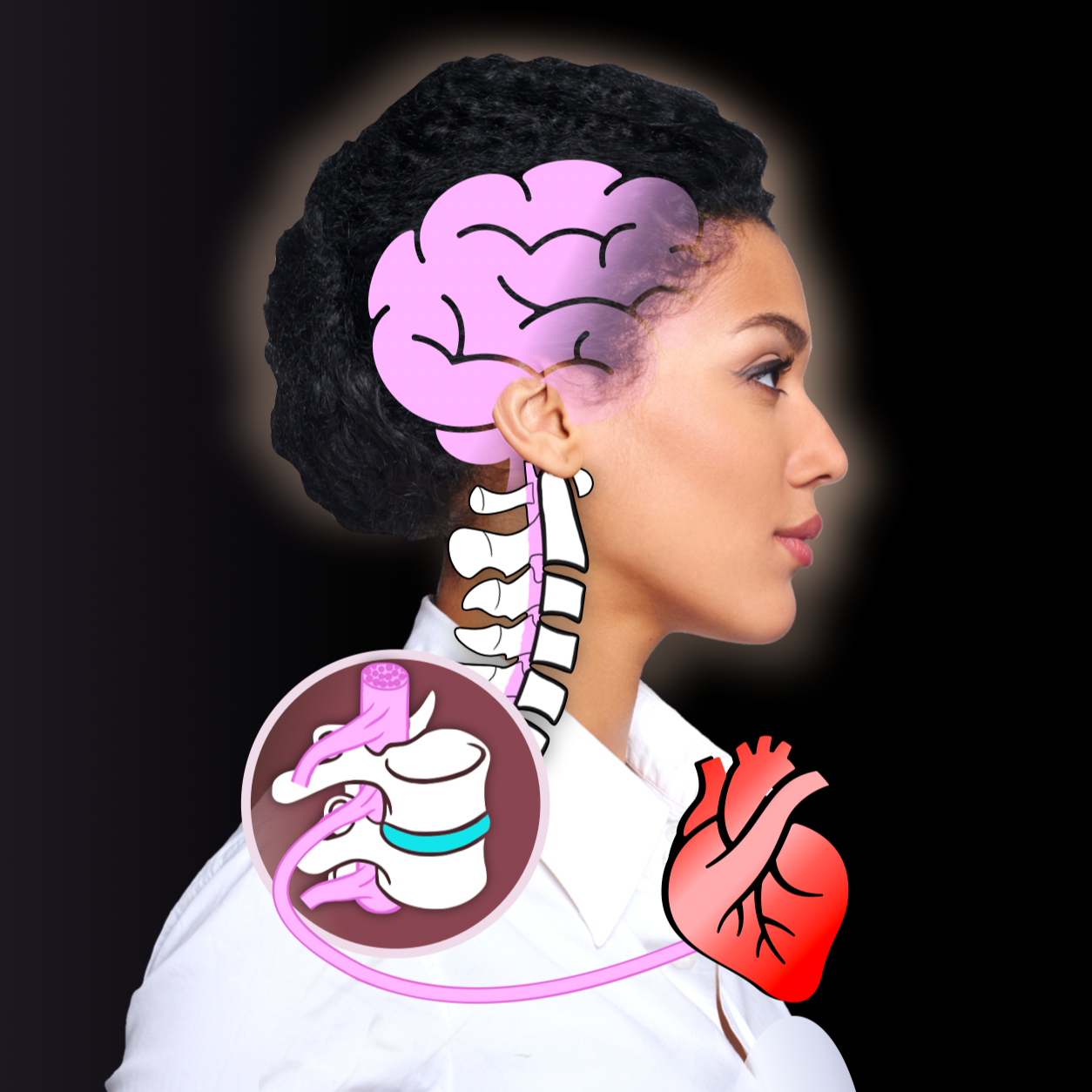
Your nervous system is the control centre for your entire body. Through vibrational and electrical signalling, your brain, spinal cord and nerves control and coordinate every single system and function of your body.
-
Your spine has 24 vertebral bones, and over 200 joints. These bones encase and protect the spinal cord and nerves, which connect your brain to every single organ and tissue of the body.
An optimal spine has three healthy curves that act as a spring, distributing weight and allowing for healthy, flexible movement. The joints of your spine have special cushioned tissues for shock absorption and support. These hydrated spinal discs have no primary blood supply, and rely on vertebral movement to pump nutrients and fluid into the discs to maintain height and strength.
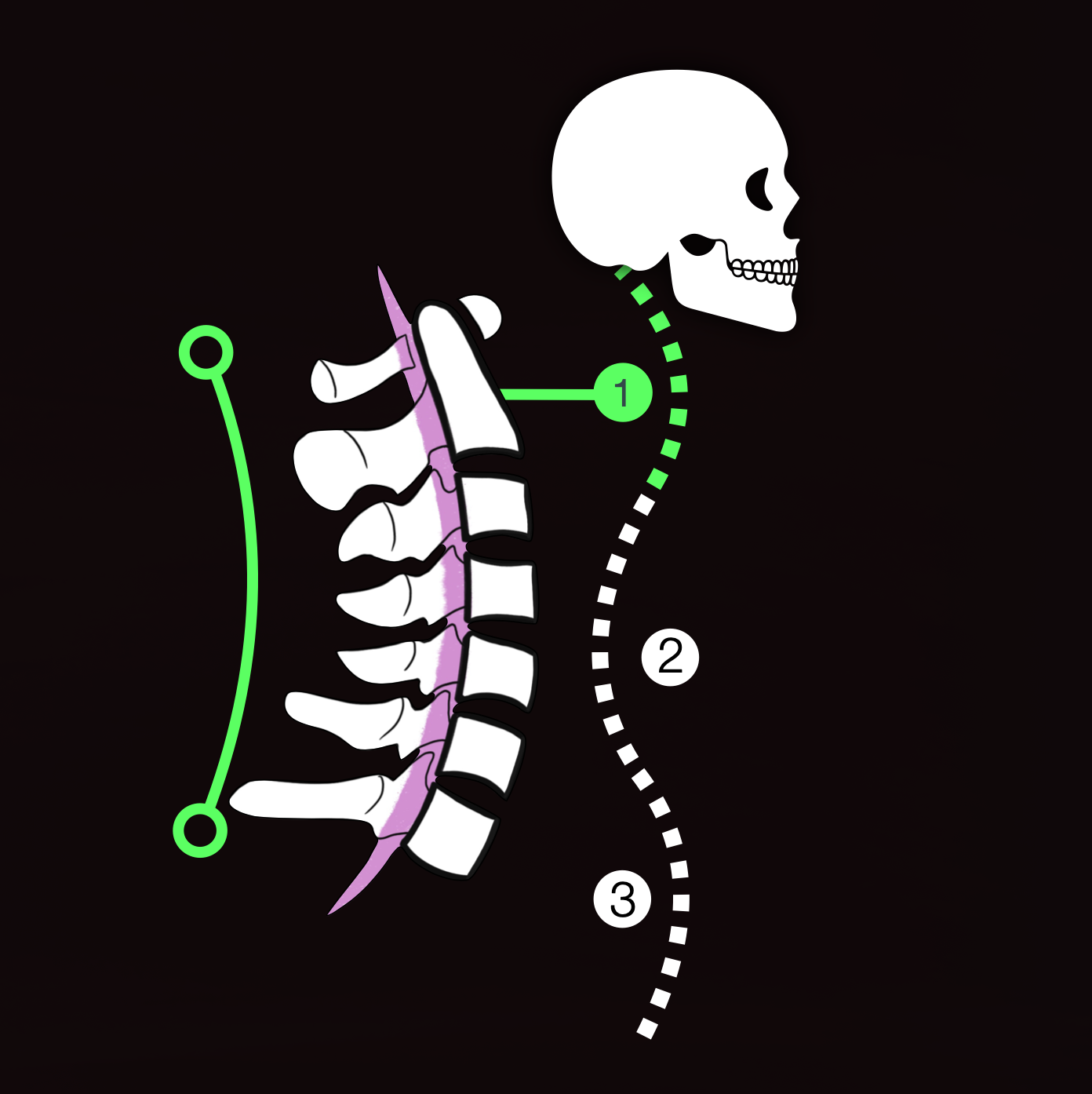
An optimal spine has three healthy curves that act as a spring, distributing weight and allowing for healthy, flexible movement. The joints of your spine have special cushioned tissues for shock absorption and support. These hydrated spinal discs have no primary blood supply, and rely on vertebral movement to pump nutrients and fluid into the discs to maintain height and strength.

Your spinal cord is like a violin string. Tension on your cord produces a certain vibrational tone, altering the vibrational (acoustic) waves that communicate to every cell in your body and back to your brain.
This affects not only your physiological function and spinal structure, but also the behaviours and actions you choose to engage in, the way you structure your life, and your perception within your body and of your life.
-
Movement creates information for your brain, and your brain uses this information to coordinate the way it holds, shifts and moves your body.
The body is in its most flexible and adaptable state when information can travel freely and undistorted through the spinal cord and spinal nerves, connecting brain and body. Your behaviours in life will also reflect more consistently with your authentic nature.
A Healthy System
Is a Flexible One
Stress can be a healthy part of life. Healthy living is the ability to process and adapt to short-term stressors — such as conflicts and disagreements, exercise, drinking caffeine, riding a rollercoaster, watching a thriller movie, or public speaking.
In NetworkSpinal, we call this flexibility: the ability to shift from fight-or-flight to rest-and-repair appropriately and with ease.
With a coherent and flexible spine and nervous system, you experience things more authentically as they are, and are able to express yourself and respond in a way that is more authentically you and appropriate in the moment.
-
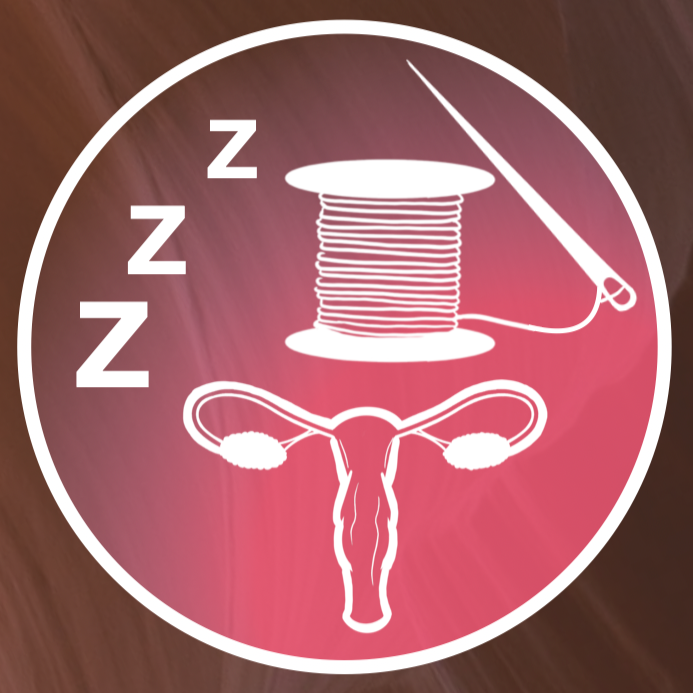
When your body feels safe and is able to disengage fight-or-flight, this mode redirects energy internally for healing, rest, repair and growth. Your brain does this by communicating with your respiratory (breath), hormonal (reproductive) and immune (detox and cellular repair) systems. Your resistance to stress depends on how easily you can engage this mode. When the behaviours, structures and perceptions of our body remain altered from Chronic Stress, it can be difficult to engage this mode.
Responding to Stress
Fight-or-Flight
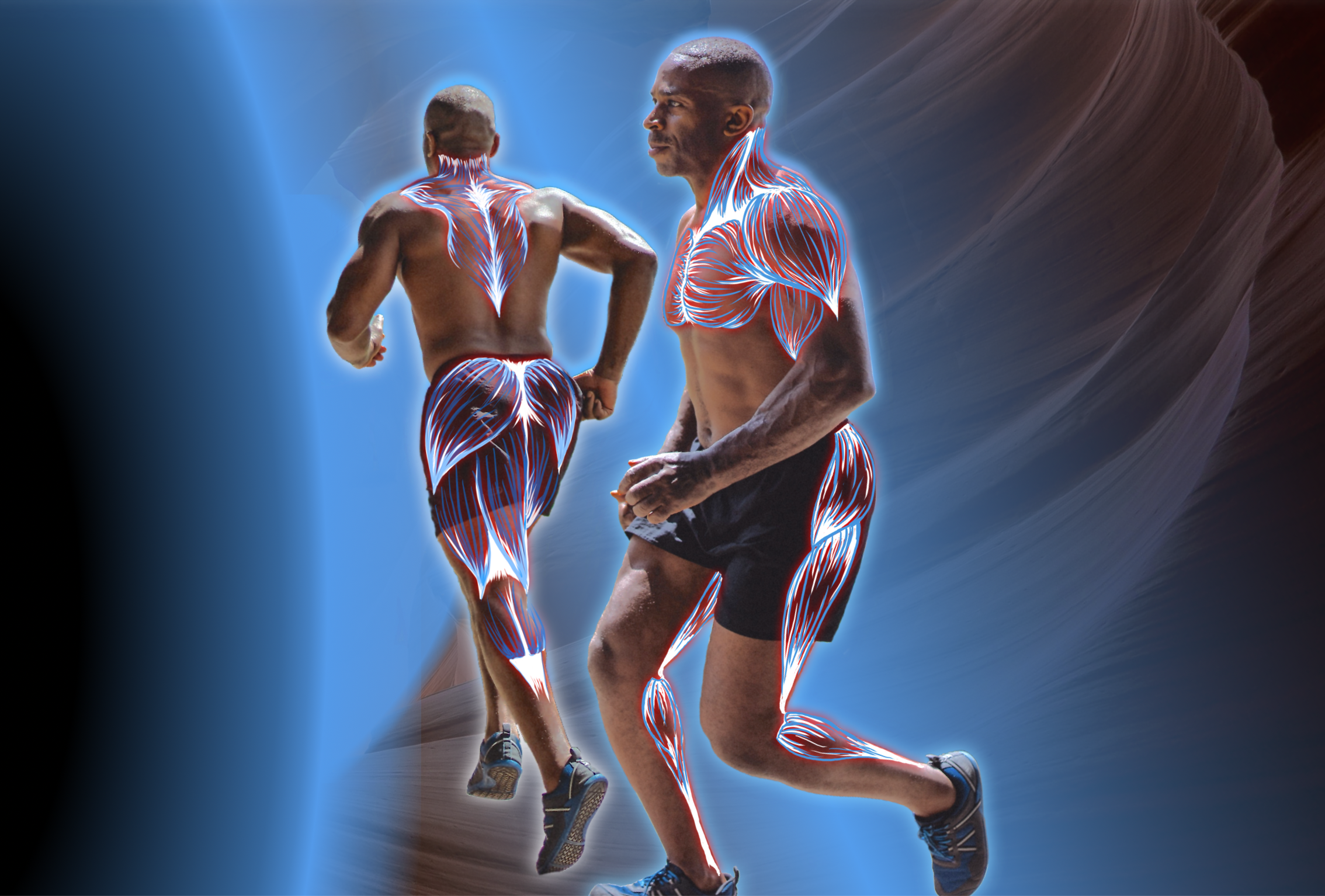
When we encounter stress or short-term threats, our system intelligently activates fight-or-flight as part of an adaptive response. This mode directs energy and attention to external vigilance, defensive muscle activation, and a release of stress hormones, so you can respond and adapt.
A component of this change is a shift in vibrational tone throughout the spinal cord — this change in tone influences your physiological function, your behaviours and your perceptions.
-
Prioritising survival — In this state, your body redirects energy and resources away from things that are non-essential in that moment, such as respiratory (breath), hormonal (reproductive) and immune (detox and cellular repair) function, towards what is essential right now.
Changes in behaviour — This includes increased muscle tension in your fight-or-flight muscles (preparing you to fight or flee), forward head posture, increased heart rate, respiration, blood pressure, and stress hormone production.
Changes in perception — Heightened external vigilance (helping you survey your environment) increases your sensitivity to light, visual and sound stimulation. At the same time, body-sense awareness, physical sensations and memory recall are reduced.

Chronic Stress and
Long-Term Tension
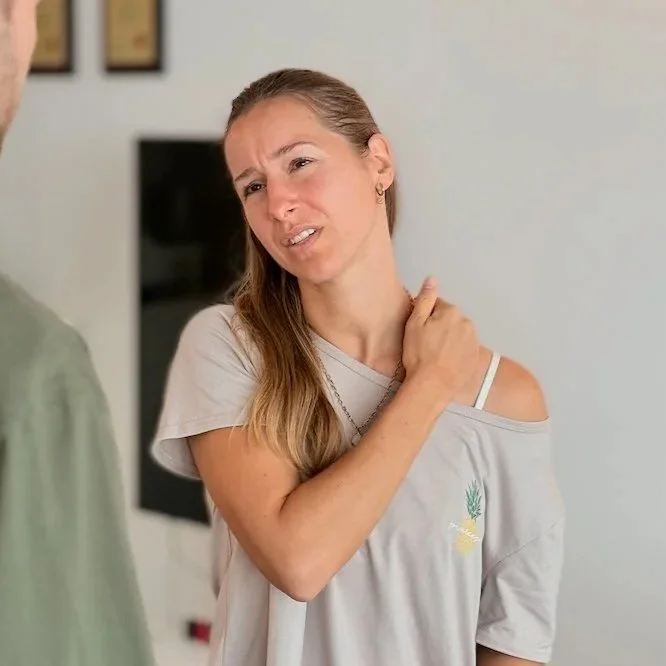
If fight-or-flight is engaged too often, for too long, Chronic Stress creates a constant state of hyper-vigilance. This state fundamentally alters your body's behaviour, changes the structure of your spine, and shifts your perception of your body and of your life. Under Chronic Stress, your ability to heal, recover and grow is impaired.
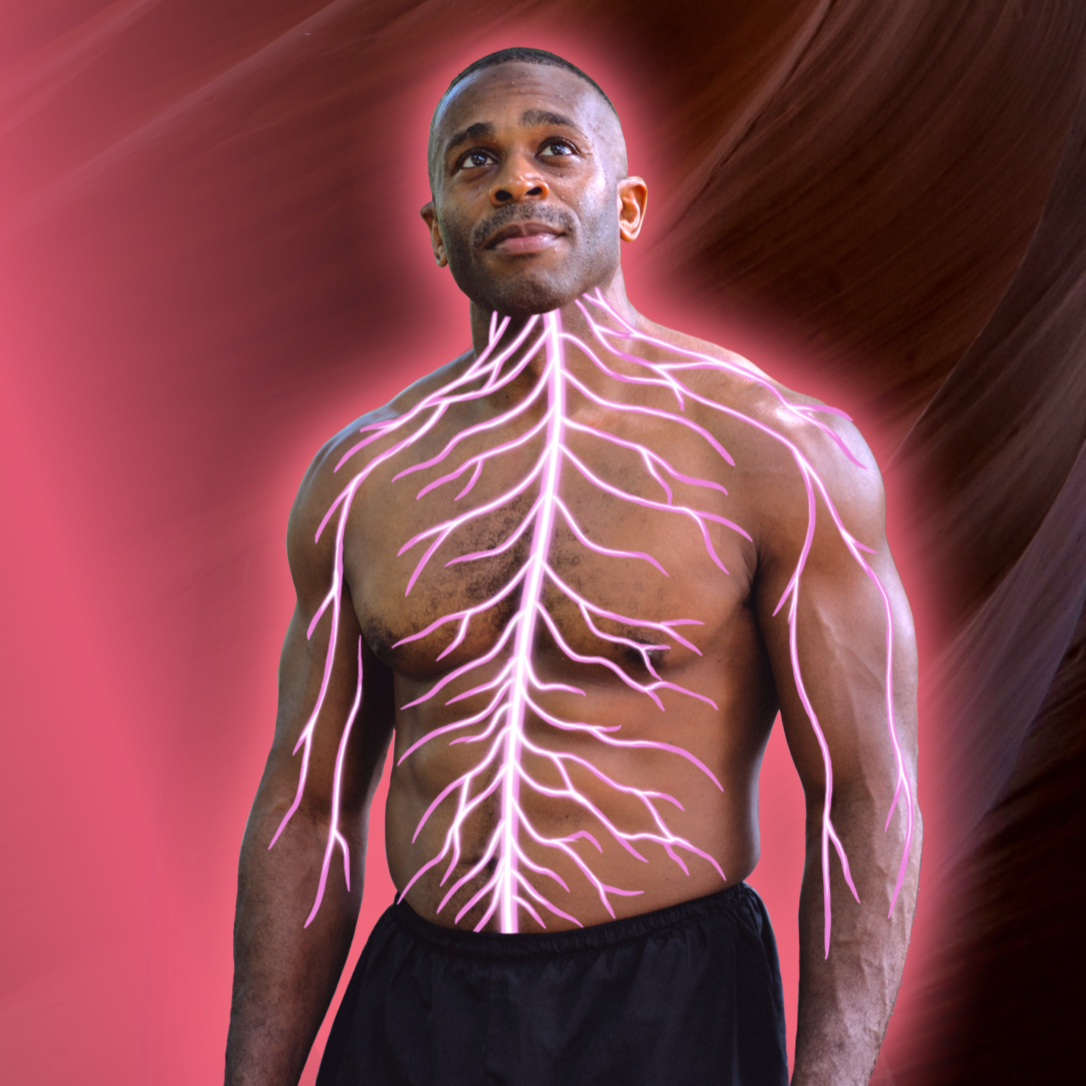
This is where we carry persistent muscle tightness and rigidity in the body. Constant activation of fight-or-flight leads to forward head posture, tension and distortion of the spine — stretching the spinal cord by up to 7cm. This tension and stretching reduces nerve transmission, affecting what those nerves control.
-
When your body feels safe and is able to disengage fight-or-flight, this mode redirects energy internally for healing, rest, repair and growth. Your brain does this by communicating with your respiratory (breath), hormonal (reproductive) and immune (detox and cellular repair) systems. Your resistance to stress depends on how easily you can engage this mode. When the behaviours, structures and perceptions of our body remain altered from Chronic Stress, it can be difficult to engage this mode.


Fight-or-Flight
Continued…
Your nervous system is smart. In the face of overwhelming trauma or Chronic Stress, it deliberately and intelligently finds a way to disconnect and dampen what it cannot process in the moment.
It does this by forming a distortion pattern along the spine and spinal cord, reducing the barrage of information hitting the brain — like ear muffs to dampen sound. This is a protective mechanism. Spinal cord tension, and its distortions, are actually part of a self-preservation strategy.
-
In NetworkSpinal, we identify five major types of distortion patterns, and refer to them as phases. Each phase has a different presentation, influencing the behaviours, structures and perceptions of your body. Phase analysis is used regularly in NetworkSpinal care — a precise way of measuring how stress is impacting your body in real time.
-
Your nervous system is the master controller of your entire body, making up the wiring, the messaging system, and the control centre all in one.
Through constant electrical and vibrational signalling it links your brain, spinal cord and nerves to every cell and system of the body; shaping how you move, think, emote and function.
Balance in the following two modes is crucial for supporting our nervous system to THRIVE under pressure, and avoid BREAKING DOWN from stress.
Fight-or-Flight
When activated by short-term stress, this mode directs energy and attention outward; sharpening external vigilance, engaging defensive muscle activity, and releasing stress hormones so you can respond and adapt.
This is a healthy, short-term response.But when engaged too often or for too long, chronic-stress creates a constant state of hyper-vigilance.
This prolonged fight-or-flight state alters your body’s behaviour, changes the structure of your spine, and shifts your perception of both your body and your life.Under chronic-stress, your ability to heal, recover and grow becomes impaired.
Rest-and-Repair
When your body feels safe and is able to disengage fight-or-flight, this mode redirects energy internally for healing, rest, repair and growth.
Your nervous system does this by communicating with your respiratory system (breath), hormonal system (reproductive) and immune system (detox & cellular repair).Your resilience to stress depends on how easily you can transition into rest-and-repair mode.
Stuck in a loop
Through things like trauma, abuse, neglect or any form of overwhelm: chronic-stress reshapes the behaviours, structures and perceptions of your body — making it increasingly difficult to switch out of fight-or-flight, and engage rest-and-repair.
You may notice persistent muscle tension, poor sleep, digestive slowdown, a constantly racing mind, a body that never quite relaxes, and constant external hyper-vigilance.
Many will experience hormonal or reproductive dysfunction, breathing disturbances (shallow breathing) or immune system challenge.
Without restoring balance, these patterns can trap the nervous system in a state of fight-or-flight that can last for decades…
Read more about the impact of chronic-stress below, see Element 5 - PACE scores.
-
In its application as a chiropractic spinal-based healthcare system NetworkSpinal practitioners develop a deep and studied understanding of the tension in your body, and the tension in your life.
By assessing neurological patterns of thinking and behaving; they are trained to evaluate the behaviours, structures and perceptions of your body and your life, to deduce your unique level of nervous system adaptability or nervous system overwhelm.
Without cracking, manipulation or equipment, NetworkSpinal practitioners utilise a series of precise light-touch contacts at specific areas of your spine to facilitate greater somatic (body) connection.
This increase in connection allows for a stronger equilibrium between fight-or-flight and rest-and-repair.By enhancing brain-body communication NetworkSpinal practitioners facilitate your body in reorganising old, inefficient and inauthentic neurological patterns of thinking and behaving — replacing them with optimised, energy-efficient and sustainable neurological strategies for human performance, physiological function and life enjoyment.
In other words, NetworkSpinal is about optimising the humanOS (operating system), helping your body to self-heal and self-regulate.
“There can be no doubt that we are witnessing the birth of a powerful method of healing, grounded in rigorous scientific fact, that will become integral to future systems of healthcare.”
— Dr. Kim Jobst, Editor in Chief, Journal of Alternative and Complimentary MedicineTo read more about how NetworkSpinal works, follow the 6 Elements of NetworkSpinal below.
PACE Trauma Scores
Our past may have shaped
us, but it can also reshape us.
Positive & Adverse Childhood Experiences or PACE scores are a way of measuring the impact of traumatic childhood experiences.
-
Research has shown that higher Adverse Childhood Experiences (ACE scores) are associated with a significantly greater risk of negative physical, mental and social health outcomes in adulthood.
Whereas Positive Childhood Experiences (PCE scores) promote safe, stable and nurturing relationships and are associated with greater positive outcomes later in life.
PCE scores have the potential to negate the detrimental effects from high ACE scores. We cannot change what’s happened in our past or think out way out of it. We can however, through a somatic mind and body approach, change our relationship with, and the meaning we give to it.
As part of our trauma informed framework, we will work with you to evaluate your PACE scores to see how your experiences have shaped the state of your nervous system and impacted the structures, behaviours and perceptions of your body and your life.
-
NetworkSpinal is a framework that allows us to assess stress patterns in a person’s nervous system and precisely examine their level of adaptability or overwhelm at any given moment.
We evaluate a person’s chemical, physical and emotional stressors, both past and present, showing us the unique history of Fight-or-Flight and Rest-and-Repair in their body.
This reveals more than just the physical state of someone's health, and tells us how they are participating with life on a mental, emotional, social and energetic level.
Trauma fundamentally affects someone's nervous system and the way they experience, react to and engage with their world, often leaving long standing marks.
As part of our trauma informed framework, we will work with you to evaluate your PACE scores (Positive & Adverse Childhood Experiences) to see how your experiences have shaped the state of your nervous system and impacted the structures, behaviours and perceptions of your body and your life.
NetworkSpinal can be a powerful way to help change the state of someone's nervous system.
When the brain and body are more connected and coherent, the nervous system exhibits greater levels of resilience, adaptability and energy efficiency. The armouring, protection and hyper-vigilance that trauma brings can begin to diffuse and become integrated into the system as a learning experience, changing a person's relationship to it.
What a person had previously experienced as a wound then has the potential to be experienced as a gift, often inspiring others around them along the way.
PACE Trauma Scores
Our past may have shaped
us, but it can also reshape us.
Positive & Adverse Childhood Experiences or PACE scores are a way of measuring the impact of traumatic childhood experiences.
-
Research has shown that higher Adverse Childhood Experiences (ACE scores) are associated with a significantly greater risk of negative physical, mental and social health outcomes in adulthood.
Whereas Positive Childhood Experiences (PCE scores) promote safe, stable and nurturing relationships and are associated with greater positive outcomes later in life.
PCE scores have the potential to negate the detrimental effects from high ACE scores. We cannot change what’s happened in our past or think out way out of it. We can however, through a somatic mind and body approach, change our relationship with, and the meaning we give to it.
As part of our trauma informed framework, we will work with you to evaluate your PACE scores to see how your experiences have shaped the state of your nervous system and impacted the structures, behaviours and perceptions of your body and your life.
-
NetworkSpinal is a framework that allows us to assess stress patterns in a person’s nervous system and precisely examine their level of adaptability or overwhelm at any given moment.
We evaluate a person’s chemical, physical and emotional stressors, both past and present, showing us the unique history of Fight-or-Flight and Rest-and-Repair in their body.
This reveals more than just the physical state of someone's health, and tells us how they are participating with life on a mental, emotional, social and energetic level.
Trauma fundamentally affects someone's nervous system and the way they experience, react to and engage with their world, often leaving long standing marks.
As part of our trauma informed framework, we will work with you to evaluate your PACE scores (Positive & Adverse Childhood Experiences) to see how your experiences have shaped the state of your nervous system and impacted the structures, behaviours and perceptions of your body and your life.
NetworkSpinal can be a powerful way to help change the state of someone's nervous system.
When the brain and body are more connected and coherent, the nervous system exhibits greater levels of resilience, adaptability and energy efficiency. The armouring, protection and hyper-vigilance that trauma brings can begin to diffuse and become integrated into the system as a learning experience, changing a person's relationship to it.
What a person had previously experienced as a wound then has the potential to be experienced as a gift, often inspiring others around them along the way.
PACE Trauma Scores
Our past may have shaped
us, but it can also reshape us.
Positive & Adverse Childhood Experiences or PACE scores are a way of measuring the impact of traumatic childhood experiences.
-
Research has shown that higher Adverse Childhood Experiences (ACE scores) are associated with a significantly greater risk of negative physical, mental and social health outcomes in adulthood.
Whereas Positive Childhood Experiences (PCE scores) promote safe, stable and nurturing relationships and are associated with greater positive outcomes later in life.
PCE scores have the potential to negate the detrimental effects from high ACE scores. We cannot change what’s happened in our past or think out way out of it. We can however, through a somatic mind and body approach, change our relationship with, and the meaning we give to it.
As part of our trauma informed framework, we will work with you to evaluate your PACE scores to see how your experiences have shaped the state of your nervous system and impacted the structures, behaviours and perceptions of your body and your life.
-
NetworkSpinal is a framework that allows us to assess stress patterns in a person’s nervous system and precisely examine their level of adaptability or overwhelm at any given moment.
We evaluate a person’s chemical, physical and emotional stressors, both past and present, showing us the unique history of Fight-or-Flight and Rest-and-Repair in their body.
This reveals more than just the physical state of someone's health, and tells us how they are participating with life on a mental, emotional, social and energetic level.
Trauma fundamentally affects someone's nervous system and the way they experience, react to and engage with their world, often leaving long standing marks.
As part of our trauma informed framework, we will work with you to evaluate your PACE scores (Positive & Adverse Childhood Experiences) to see how your experiences have shaped the state of your nervous system and impacted the structures, behaviours and perceptions of your body and your life.
NetworkSpinal can be a powerful way to help change the state of someone's nervous system.
When the brain and body are more connected and coherent, the nervous system exhibits greater levels of resilience, adaptability and energy efficiency. The armouring, protection and hyper-vigilance that trauma brings can begin to diffuse and become integrated into the system as a learning experience, changing a person's relationship to it.
What a person had previously experienced as a wound then has the potential to be experienced as a gift, often inspiring others around them along the way.
PACE Score Presentation
Preventative & Adverse Childhood Experiences and your health.

If you feel unsafe, or require phone support, please contact LifeLine on 13 11 14
↓Scroll Down For QnA
& Self Evaluation Questionnaire.

Common Questions
-
Yes.
In the largest study of its kind—conducted with over 2,800 participants and published by the University of California, Irvine (Departments of Neurobiology, Surgery, and Sociology)—researchers found that:
Clients under NetworkSpinal care experienced physical and psychological changes, including increased flexibility of the spine, increased range of motion, improved mood & sense of relaxation, and greater capacity to cope with stressful situations.
The study highlights "statistically and clinically significant changes" — “demonstrating profound positive outcomes” across all measured wellness domains including;
Perception of Wellness
76% improvementPerception of Physical State
64% improvementMental / Emotional State
64% improvementStress Evaluation
66% improvementLife Enjoyment
69% improvementOverall Quality of Life
59% improvement
This is how NetworkSpinal can impact not just your body, but also your life!
Are you ready for THIS kind of change?
-
During childhood, the nervous system is incredibly adaptable and responsive to input as neurological patterns are being established through neuroplasticity. The brain lays down many neural pathways as a child interacts with their environment, and then consistently prunes off any pathways that are no longer used.
Excessive physical, chemical (including nutrient deficiencies) or emotional stress a child sustains will reinforce Fight-or-Flight pathways as learned neuro-behavioural patterns.
See above for PACE score presentation.This is precisely why stress in these formative years has a lifelong impact on health expression, behaviour and illness rates.
NetworkSpinal can help regulate a child's nervous system through these crucial years of development.
NetworkSpinal is gentle, non-invasive and perfectly safe for newborns, children, adults and seniors.
Chiropractors are trained to assess developmental milestones in children and are often sought after by parents.
The results of the largest and most robust inquiry in Australia to date (found here) involving 21,874 submissions revealed:
98% of parents reported chiropractic helping their child.
99.7% of parents having positive experiences.
Zero cases of harm reported.
-
As we are establishing greater awareness within your body, in the process of your nervous system finding areas of tension and unwinding those patterns, it can reconnect to certain experiences and sensations it had previously compartmentalised and disconnected from.
In these moments we can often re-experience an emotion or feeling we hadn't let ourselves fully experience at the time an event occurred. This is a natural phenomenon throughout the healing process called retracing. Retracing is expected, temporary and a good sign that energy is moving and connection is being made.
Emotion means “energy-in-motion”, and its purpose is to compel us to take action.
Research within this field was conducted by the renowned neuroscientist Candace B. Pert, a Nobel Prize nominee who’s book Molecules of Emotion explores the link between emotions and the mind-body connection.
-
NetworkSpinal has demonstrated positive outcomes for improving HRV (Heart-Rate Variability), which is a gold standard measure of nervous system stress. Because of the strong correlation between HRV, vagus nerve tone and the parasympathetic (Rest-and-Repair) nervous system, NetworkSpinal can play a big part in regulating healthy vagal tone.
In fact, within SRI (SomatoRespiratory Integration exercise) as part of your NetworkSpinal care, we focus on specific branches of the vagus nerve, using hand positions, movement and focus to enhance connection and regulation.
A healthy vagus nerve (or healthy vagal tone) regulates cardiac, digestive and immune function. In order to have healthy vagal tone, the body needs to be able to engage its natural Rest-and-Repair state.
Stress, trauma and other nervous system overwhelm can engage the sympathetic Fight-or-Flight state for long periods of time, inhibiting the Rest-and-Repair functions.
NetworkSpinal can assist the body to naturally move from Fight-or-Flight into Rest-and-Repair, meaning healthier vagal tone, HRV, cardiac function, immune regulation and digestive function.
NetworkSpinal and HRV research can be found here.
Further chiropractic and HRV research can be found in article one and article two.
SELF EVALUATION,
at your own “PACE”
Complete the below self evaluation to review your own PACE score.
-
Every answer of “yes” is one point towards your ACE score.🟡 1. Did a parent or other adult in the household often or very often... Swear at you, insult you, put you down, or humiliate you?... or act in a way that made you afraid that you might be physically hurt?
🟡 2. Did a parent or other adult in the household often or very often... Push, grab, slap, or throw something at you?... or ever hit you so hard that you had marks or were injured?
🟡 3. Did an adult or person at least 5 years older than you ever... touch or fondle you or have you touch their body in a sexual way?... or attempt or actually have intercourse with you?
🟡 4. Did you often or very often feel that ... no one in your family loved you, thought you were important / special, or made regular time for you?... or, your family didn’t look out for each other, feel close, or support each other?
🟡 5. Did a parent or caregiver often or very often... make themselves the focus of many situations? Required everything to be done their way?... or demand respect from you, or use guilt or manipulation in your relationship?
🟡 6. Did you often or very often feel that ... you didn’t have enough to eat, had to wear dirty clothes, and had no one to protect you?... or Your parents were too drunk or high to take care of you or take you to the doctor if you needed it?
🟡 7. Did you daily, or multiple times a week... eat; processed, highly processed, sugary, or takeaway food of any kind?
🟡 8. Were your parents ever separated or divorced?
🟡 9. Were your parents or stepparents often or very often pushed, grabbed, slapped, had something thrown at, kicked, hit, repeatedly hit or threatened with a gun or knife?
🟡 10. Did you live with anyone who was a problem drinker or alcoholic, or who used street drugs?
🟡 11. Was a household member depressed, anxious or mentally ill (maybe requiring medication), or did a household member attempt suicide?
🟡 12. Did a household member go to prison?Please tally your total ACE score.
-
Every answer of “yes” is one point towards your PCE score.
⚪️ 1. Did you feel able to talk to your family about your feelings?
⚪️ 2. Did you feel that your family stood by you during difficult times?
⚪️ 3. We're you able to access regular, good quality and nutritious food?
⚪️ 4. Were you able to enjoy participating in community traditions?
⚪️ 5. Did you feel a sense of belonging in school?
⚪️ 6. Did you have access to regular quality time with a parent or caregiver?
⚪️ 7. Did you often or very often... have access to groups or sports outside of school that you enjoyed?... or were you able to regularly see friends outside of school?
⚪️ 8. Did you feel supported by friends?
⚪️ 9. Did you have at least two non-parent adults who took genuine interest in you?
⚪️ 10. Did you feel that you could access help if you needed it?
⚪️ 11. Did you grow up in a home where extended family happily lived with you or visited often? Including grandparents, aunties, uncles or cousins?... or did you often or very often spend positive time with extended family?
⚪️ 12. Did you feel safe and protected by an adult in your home?
Please tally your total PCE score. -
If you feel unsafe, or require phone support, please contact LifeLine Australia on 13 11 14.
In totality, the measurement of PACE scores is an evaluation of the effects of toxic stress on a persons nervous system, and the resulting effects that nervous system stress will have—throughout your body and your life.
Your nervous system is important, it controls and coordinate every single system and function of your body. From the way you think, to the way you move. This is why we incorporate PACE score evaluation as part of our thorough evaluation at Seeking More, and why thousands of people worldwide seek out a NetworkSpinal approach for their nervous system health.
How to read your results:
As explained eloquently by Dr. Nadine in the presentation above, there is a dose dependant relationship between the number ACEs you have and the presence/severity of mental & physical health conditions later in life.This means with every increase in ACEs, there is an increased risk of these health conditions, despite healthy life choices such as eating well or avoiding alcohol.
The higher your PCE score, the more protected you are against ACEs.
Meaning that if you have a high ACE score, you can be protected from the effects with a high PCE score.
To evaluate your score, please press here to read about PACE scores and outcomes.
Our PACE score questionnaire at Seeking More differs by 1-2 questions from the original source material to account for other stressors — results found in the above link are still wholly relevant.
Further Resources
